Linked Arms and Striding with Joyful Strength
9 Fine Art prints, Photographs, 9 texts of the protagonists, 4x 70 x 100 cm and 5x 60 x 80 cm
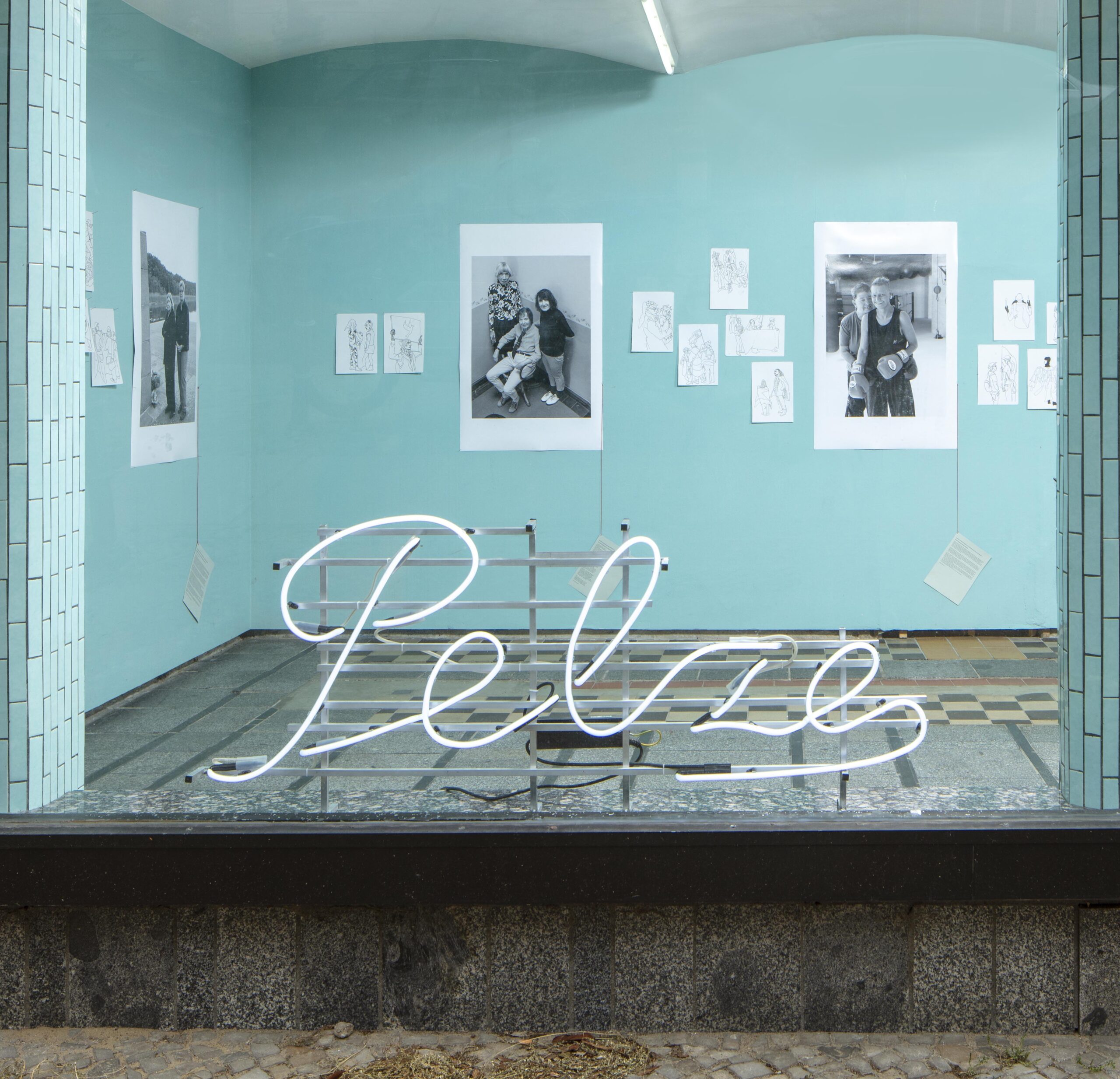
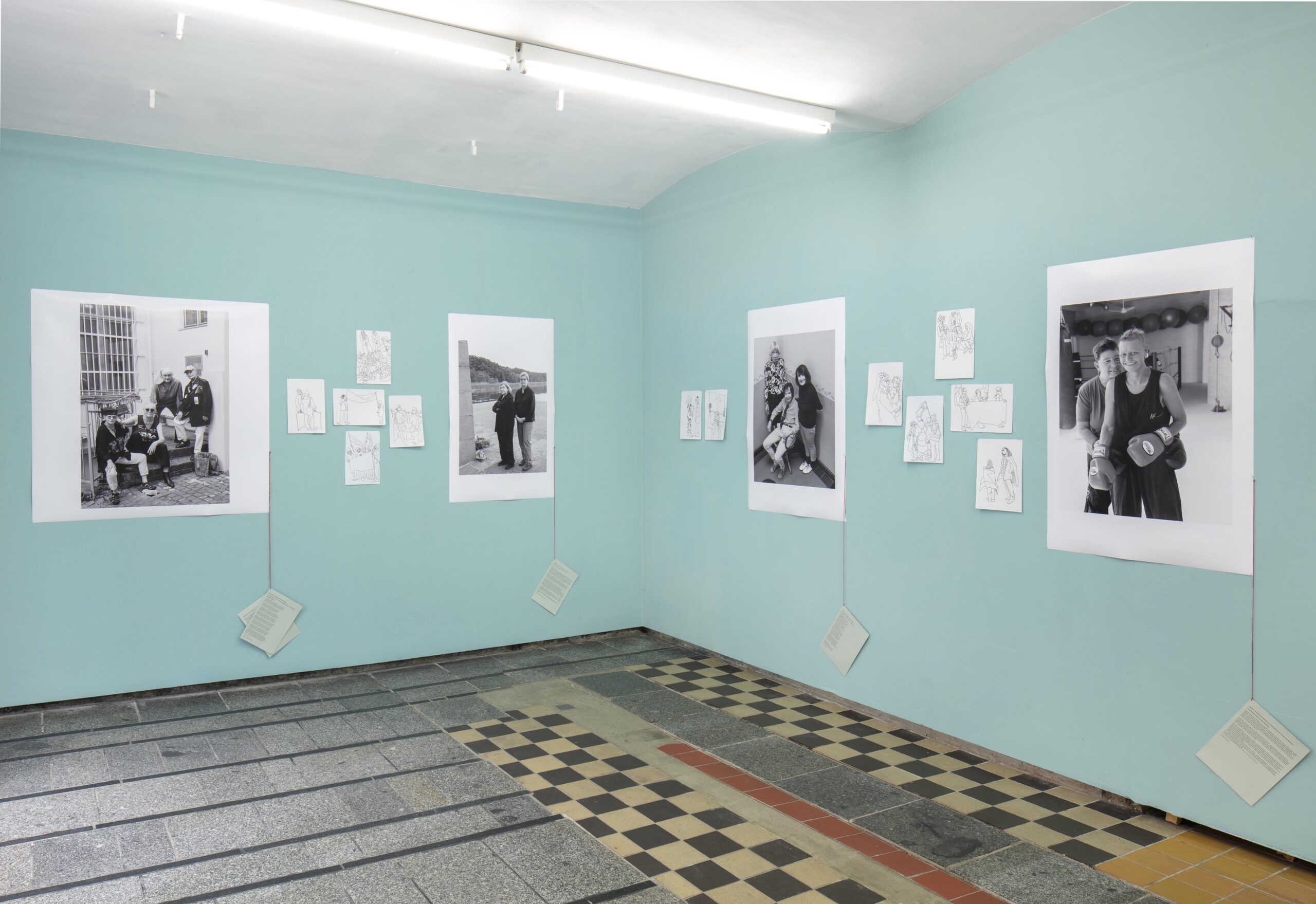
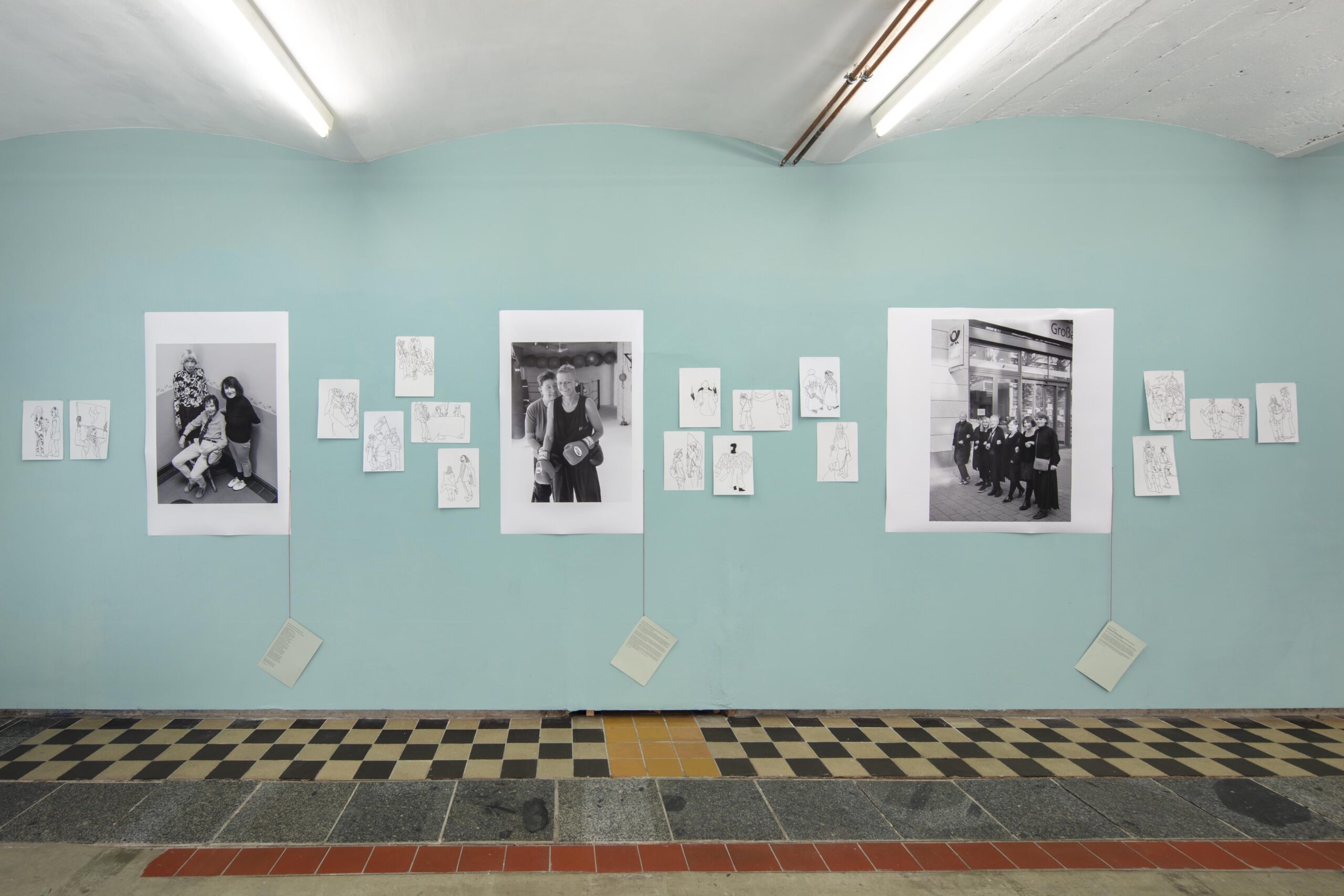
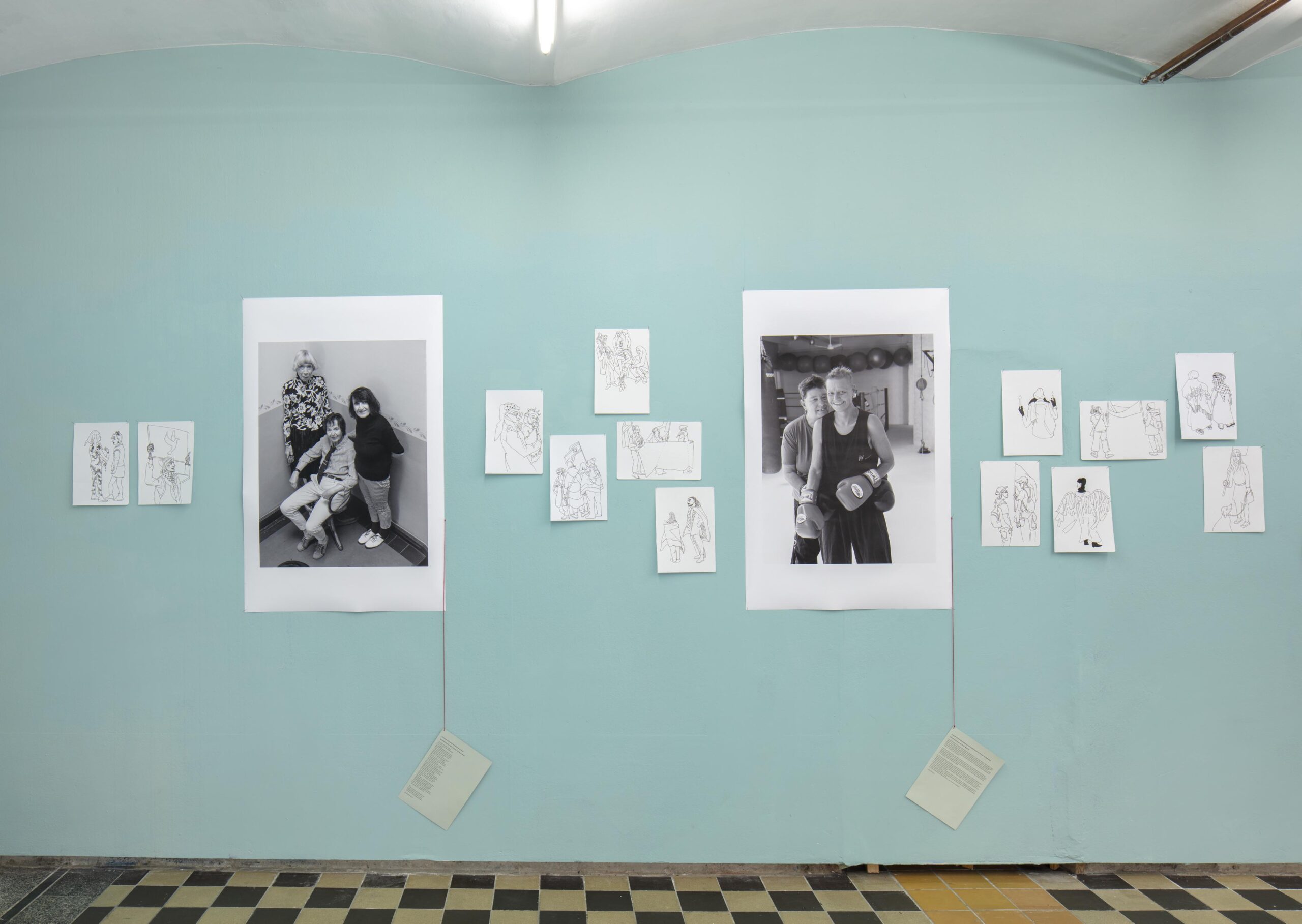
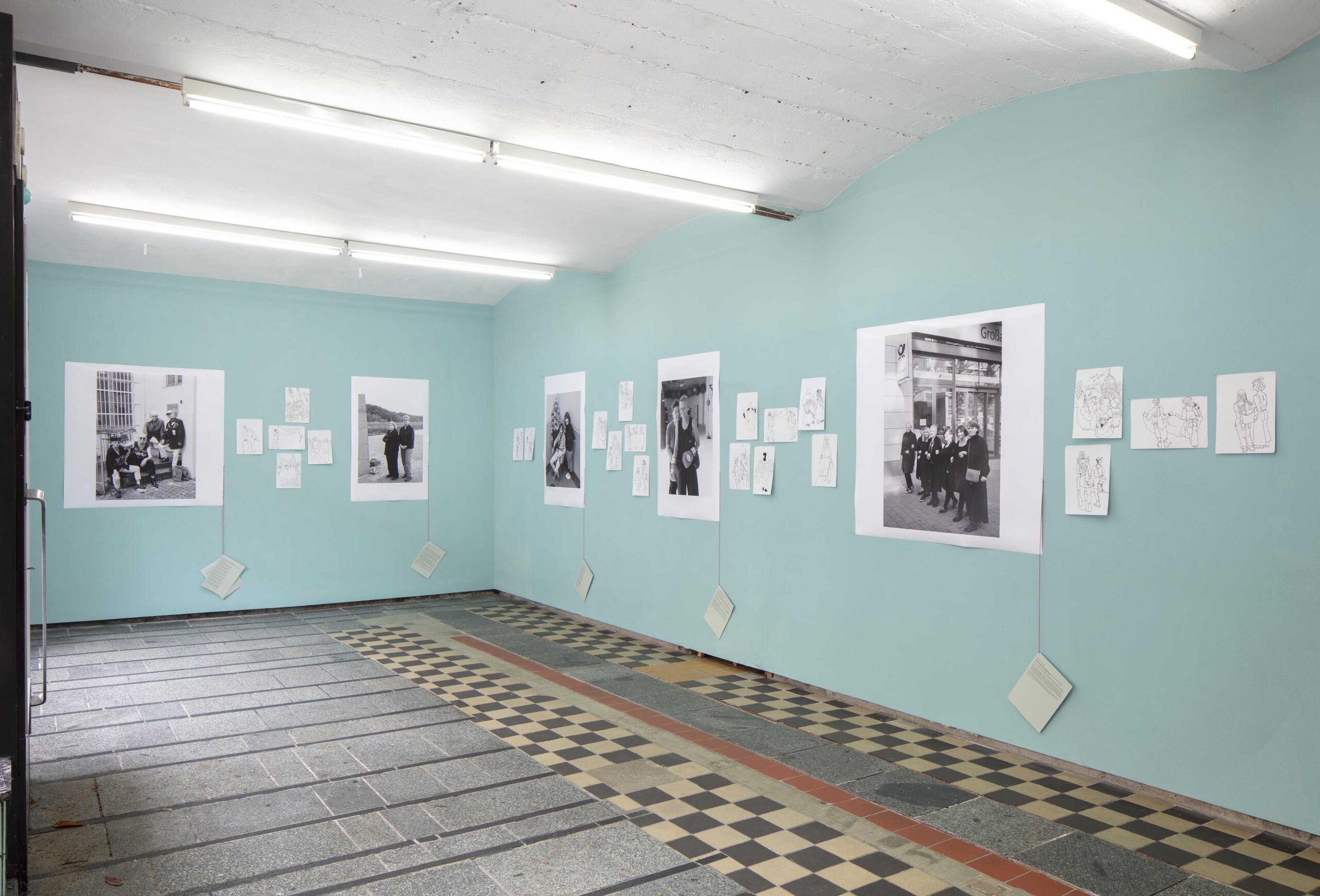
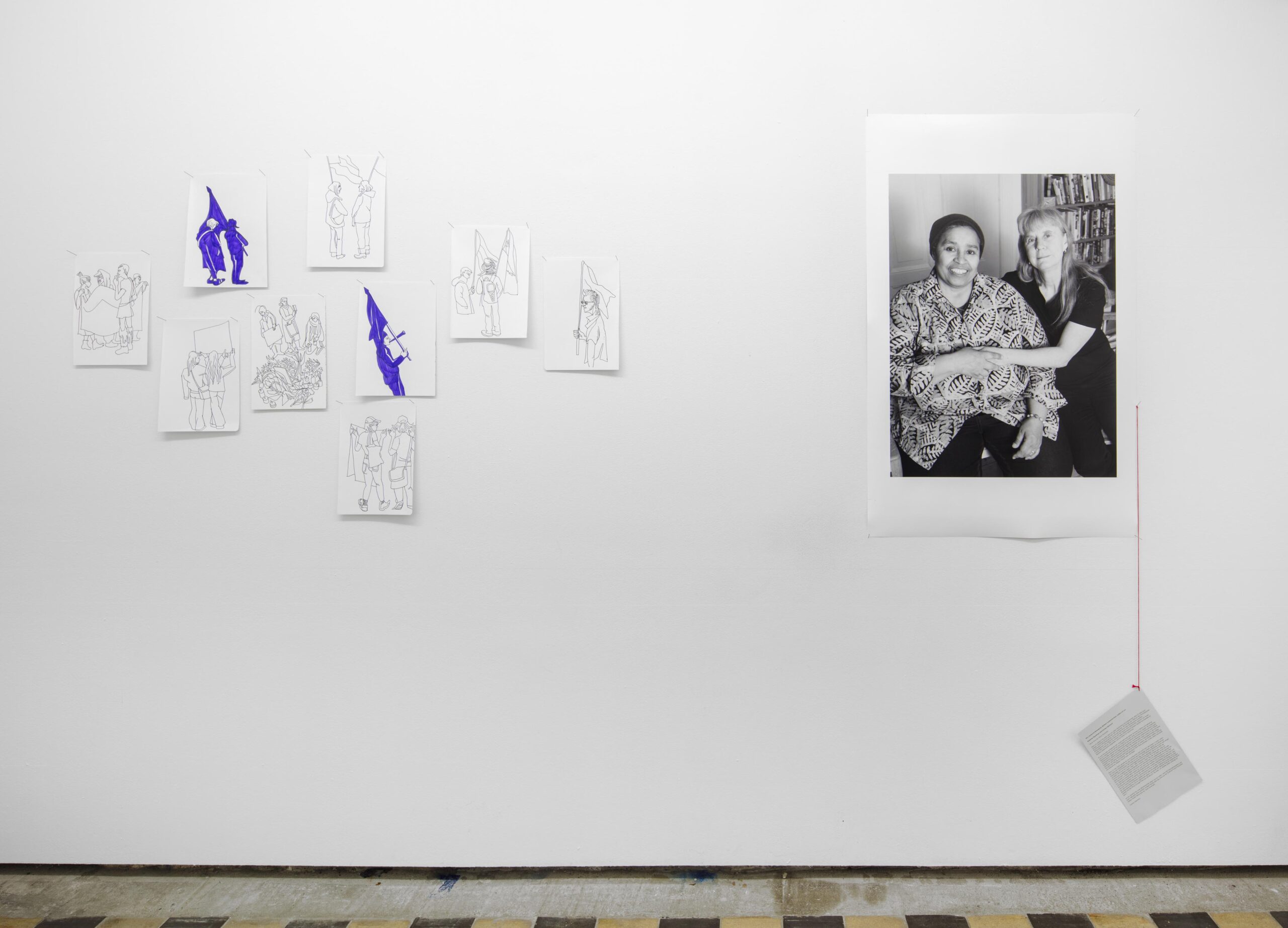
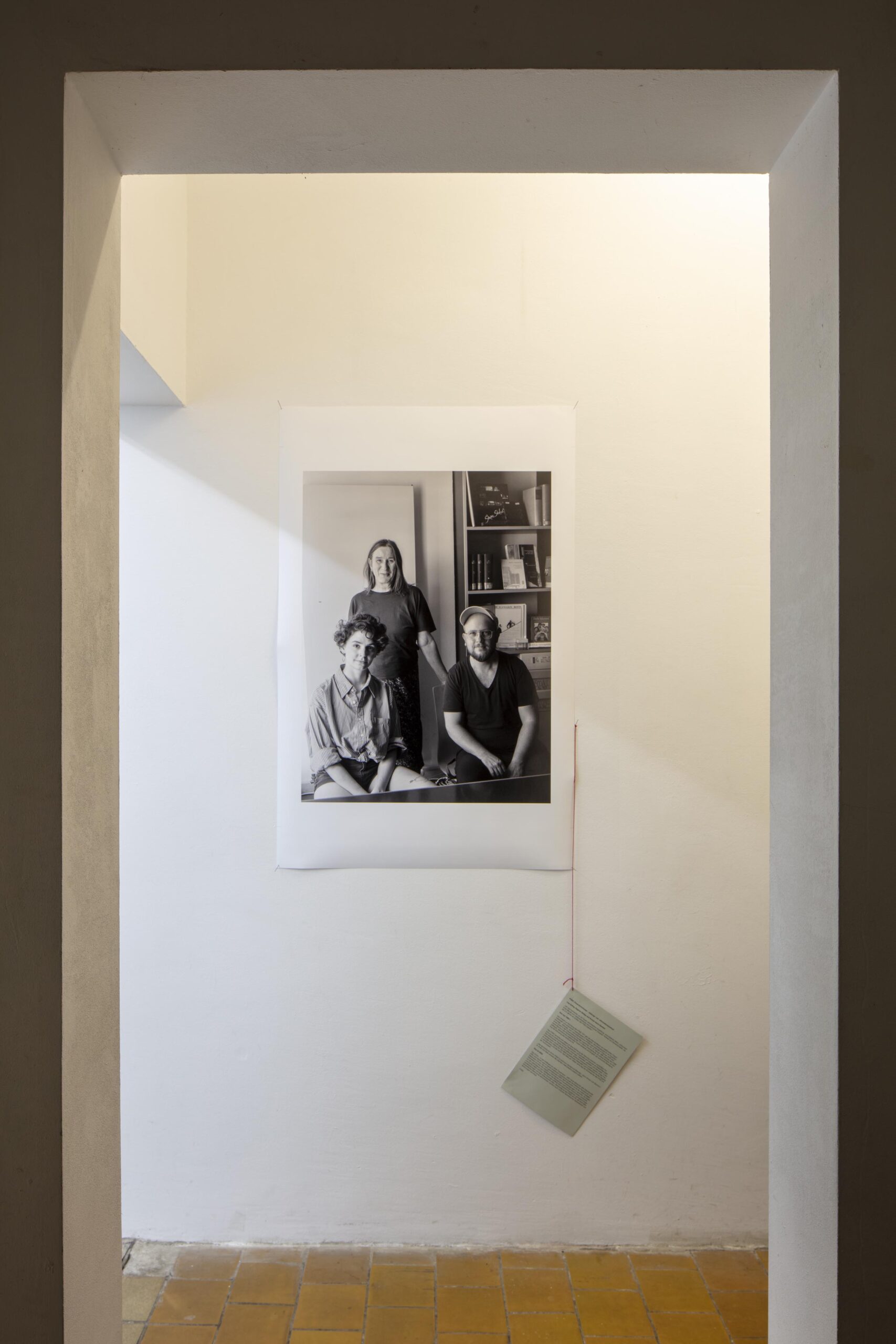
Exhibition together with Victoria Lomasko, after the butcher, 2025, Berlin
The work presents portraits of feminist groups from the 1980s in East and West Berlin, combining these photographs with texts by the portrayed women.
Lena Rosa Händle embarks on a search for traces together with various protagonists of historical groupings, in order to revive their actions through re-enactments The engagement includes the group portrait as a subject, as well as the (extended) family portrait.
In the process of being photographed, the feminists are given space and, at the same time, their own voice through their texts, which form part of the work.
Often invisible lesbian, queer, and feminist histories move into focus—along with women of older generations who possess a high degree of (social) competence and have often been socially, politically, and culturally engaged for decades, or who are still active in feminist contexts today.

Furs and artist group Black Chocolate: Traude Bührmann,
Rotraud von der Heide, Roswitha Baumeister and Ursula Bierther
A Furry Knittelverse*
In 1981, Potsdamen Straße¹ 139 –
a derelict building, left to decline,
was seized by women, fierce and proud –
lesbian feminists, strong and unbowed.
Pelze², named for the fur once sold,
became a meeting ground, brave and bold –
a space where Kiez³ and Szene⁴ aligned,
in art and action, deeply entwined.
Multi not just in medium or form –
they shattered convention, defied the norm.
Multimedia acts, unruly, intense,
performed by women who leapt every fence.
Painter Ursula B. sparked Pelze’s bright flame,
her café Schlafstörung⁵ lived up to its name.
Night-wanderers drifted through her domain,
as Sappho the dog⁶ slept mid-installation’s reign.
Copy art, table art, fashion in flux –
aesthetic collisions that startled and struck.
Roswitha B., as Dr Rossi or Anton,
the woman of light⁷, her stage persona strong.
In flickering projections she’d perform,
joyfully known, reshaping the norm.
How are masterpieces born, we ask,
down in the cellar behind art’s mask.
We follow the scent to a fur-found thing,
as if Oppenheim’s cup⁸ began to sing –
a whisper from surrealist ground,
a dream-object stirring without a sound.
Traude B. journeyed through herstorical⁹ time,
with poetry, photos and radical rhyme.
Her passion took shape in exhibitions bold,
curated with care, with stories retold.
She welcomed all artists, refined and raw,
to Steinzeichen¹⁰’s mark – expressive, sure.
And to Literarischer Mai¹¹, voices rang,
shortly after the Wende¹²’s shift and bang.
In Kreuzberg’s Schwarze Schokolade¹³ she thrived –
Rotraud v.d.R., astute, alive.
From Pelze’s café, electric, sincere,
an international space for the feminist sphere.
‘We exchanged on technique, performances, flair –
on concepts and tricks that filled the air.’
Roswitha and I shaped the space with care –
a recherche sentimentale¹⁴, feminist and rare.
A postcard archive marked the ten-year span,
our works entrusted to Bildwechsel¹⁵’s plan.
Thanks to the many wild guardians of dreams,
who gave fifteen years their brilliant gleam.
Barbara Waldow, sounds uncontained,
Renate Hampke, cardboard terrain.
With Love is a banquet¹⁶, Mahide Lein
opened the darkroom to lesbian design.
Electric – over the years the ladies took part,
their hands, their spirits, the pulse of art.
traude bührmann
*Knitteln – a rhyming form from the German Middle Ages, rough and rhythmic
¹ A pun on Potsdamer Straße, a street in Berlin. „Damen“ means „ladies“ in German, referencing the feminist reclamation of the space.
² German for „furs“. Originally a fur shop, the name was retained and repurposed as an artistic venue.
³ A Berlin term meaning „neighbourhood“, often with connotations of a tight-knit local community.
⁴ German for „scene“ or „subculture“; refers to the lesbian, feminist, queer and artistic communities.
⁵ Literally „sleep disorder“ or „insomnia“. The name of a night café within Pelze.
⁶ Refers to both the resident dog and the ancient Greek poet Sappho, emblematic of lesbian love.
⁷ Performance personas of artist Roswitha B.; „woman of light“ echoes the use of projections and persona.
⁸ Refers to Meret Oppenheim’s Object (Le Déjeuner en fourrure), a fur-covered teacup sculpture with surrealist and erotic overtones.
⁹ A feminist term for history told from women’s perspectives.
¹⁰ Literally „stone signs“; monthly exhibitions curated by Traude B.
¹¹ „Literary May“; an artistic event following German reunification.
¹² „The Turn“; refers to the period of German reunification in 1989-90.
¹³ „Black Chocolate“; a female artist group, founded 1982.
¹⁴ A sentimental journey – the investigation of feminist lesbian memory work.
¹⁵ A feminist art archive and network based in Hamburg.
¹⁶ The title of an erotic installation by Mahide Lein.